
Table of Contents
ToggleFibermaxxing 2026: The Ultimate Guide to the Gut Health Revolution
INTRODUCTION
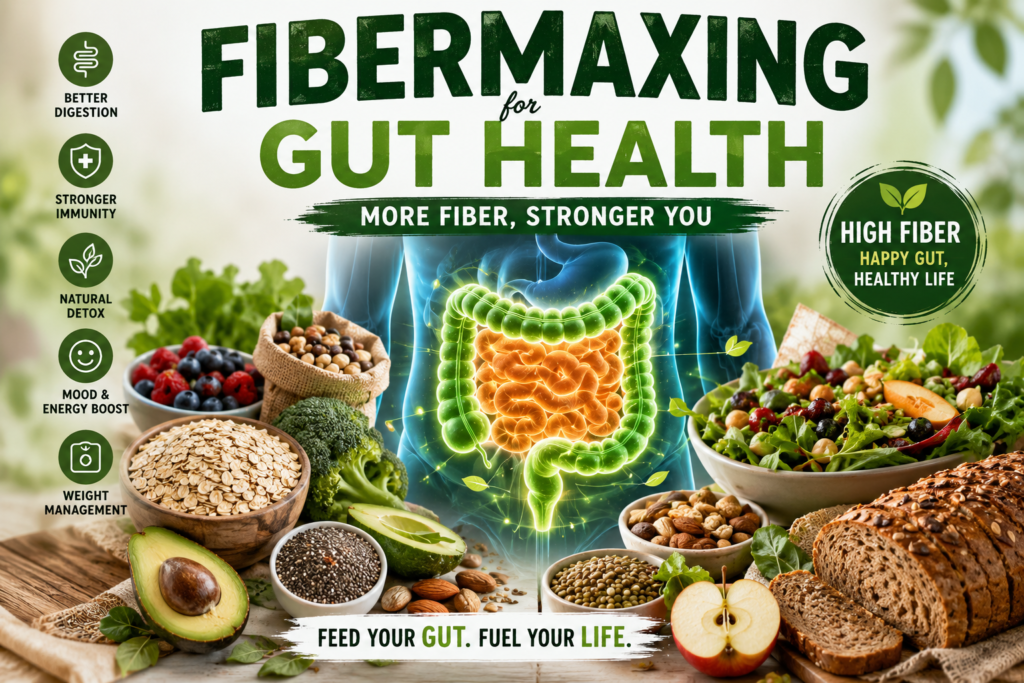
Gut health isn’t just trending—it’s becoming the foundation of preventive medicine. In 2026, a new movement called fibermaxxing is reshaping how Americans approach nutrition and wellness. Unlike restrictive diets or expensive supplements, fibermaxxing is about optimizing your fiber intake to unlock transformative health benefits.
If you’ve noticed more conversations about gut microbiome, digestive wellness, and fiber supplementation on health platforms and among wellness communities, you’re witnessing fibermaxxing in action. This isn’t a fad. It’s backed by decades of nutritional science finally hitting mainstream consciousness.
The gut health revolution is here, and fibermaxxing is leading the charge. Whether you’re struggling with digestion, looking to boost immunity, or wanting to feel energized, this guide will show you exactly how to leverage fibermaxxing to transform your health.
1. WHAT IS FIBERMAXXING?
Fibermaxxing is the strategic practice of maximizing fiber intake through whole foods and targeted supplementation to optimize gut health, digestive function, and overall wellness. It goes beyond simply eating fiber—it’s a deliberate, data-driven approach to nourishing your microbiome.
Think of it as intentional dietary optimization. Rather than hitting the minimum recommended fiber (25-30 grams daily), fibermaxxing enthusiasts aim for 40-60+ grams through intelligent food choices. The goal isn’t excess; it’s optimal gut function.
Why Is Fibermaxxing Different From Regular Fiber Intake?
- Traditional fiber advice focuses on meeting baseline requirements. Fibermaxxing emphasizes:
- Variety: Different fiber types (soluble, insoluble, prebiotic, resistant starch)
- Consistency: Daily optimization rather than occasional efforts
- Measurement: Tracking intake and monitoring results
- Quality: Whole foods over heavily processed sources
- Personalization: Adjusting to individual gut responses
Fibermaxxing recognizes that one-size-fits-all nutrition doesn’t work. Your gut is unique, and fibermaxxing helps you find your optimal level.
2. WHY FIBERMAXXING IS THE 2026 GUT HEALTH REVOLUTION
The gut health market exploded from a $14 billion industry in 2020 to over $90 billion projected by 2027. But fibermaxxing stands out as the most evidence-based, accessible revolution in this space.
The Convergence of Factors Making 2026 the Fibermaxxing Moment
- Increased Scientific Understanding
Recent microbiome research, particularly from Stanford and MIT labs, has proven that fiber directly shapes bacterial composition and metabolic health. 2026 marks the year this research transitioned from academia to mainstream health consciousness. - Affordable and Accessible
Unlike probiotic supplements (expensive and inconsistently effective), fiber comes from affordable whole foods—beans, vegetables, fruits, and whole grains. Fibermaxing democratizes gut health. - Mental Health Connection
The gut-brain axis research now proves that your microbiome influences mood, anxiety, and cognitive function. Americans are increasingly seeking natural solutions beyond pharmaceuticals, making fibermaxxing deeply relevant. - Return to Whole Foods
After years of supplement culture, the wellness community is pivoting toward food-as-medicine. Fibermaxing aligns perfectly with this cultural shift. - Performance and Longevity Focus
Athletes, biohackers, and longevity enthusiasts have adopted fibermaxing for enhanced energy, recovery, and lifespan optimization. When fitness influencers embrace a trend, mainstream adoption follows.
The 2026 gut health revolution isn’t about expensive probiotics or restrictive protocols. It’s about fiber. It’s about sustainability. It’s about fibermaxing.
3. THE SCIENCE BEHIND FIBERMAXXING
Your gut microbiome contains over 100 trillion bacteria. These microorganisms directly influence:
- Immune function (70% of immunity originates in the gut)
- Energy production and metabolism
- Hormone synthesis and regulation
- Mental health and cognitive function
- Nutrient absorption
- Chronic disease prevention
How Fiber Feeds Your Microbiome
- Fiber isn’t digested in your small intestine. Instead, it travels to your colon, where trillions of bacteria ferment it. This process produces short-chain fatty acids (SCFAs), particularly butyrate—a molecule critical for:
- Intestinal barrier integrity
- Anti-inflammatory signaling
- Brain health (crosses blood-brain barrier)
- Metabolic regulation
- Disease resistance
The Fibermaxing Formula:
Optimal Fiber Intake = Maximum SCFA Production = Optimal Health Outcomes
Types of Fiber in Fibermaxxing
Soluble Fiber (oats, beans, apples)
- Ferments readily in the colon
- Produces butyrate efficiently
- Moderates blood sugar spikes
- Insoluble Fiber (wheat bran, vegetables)
- Promotes bowel movement
- Feeds different bacterial species
- Supports digestive transit
Prebiotic Fiber (inulin, chicory root, garlic) - Specifically nourishes beneficial bacteria
- Acts as selective food for “good” microbes
Resistant Starch (cooked-then-cooled potatoes, plantain flour) - Resistant to digestion
- Produces extra butyrate
- Improves insulin sensitivity
Effective fibermaxing involves consuming all four types throughout your week.
4. KEY HEALTH BENEFITS OF FIBERMAXXING
- Digestive Health and Regularity
The most immediate benefit. Within 2-3 weeks of fibermaxing, most people experience: - Consistent, healthy bowel movements
- Reduced bloating and gas
- Enhanced digestive comfort
- Normalized gut transit time
Weight Management and Metabolism
Fiber promotes satiety, reduces calorie absorption, and improves insulin sensitivity. Studies show fibermaxing correlates with a 5-10% body weight reduction when combined with consistent effort.
Cardiovascular Health
Soluble fiber binds cholesterol, reducing LDL levels by 5-10%. Regular fibermaxing lowers heart disease risk and supports healthy blood pressure.
Blood Sugar Stability
Fiber slows glucose absorption, preventing insulin spikes. For pre-diabetic and diabetic individuals, fibermaxing is game-changing.
Enhanced Immunity
A thriving microbiome directly strengthens immune function. Fibermaxing practitioners report fewer colds, reduced infection severity, and faster recovery.
Mental Health and Mood
The gut-brain axis is real. SCFA production, particularly butyrate, supports serotonin synthesis and neuroinflammation reduction. Many fibermaxers report improved mood, reduced anxiety, and better sleep quality.
Longevity and Disease Prevention
Long-term fibermaxing correlates with reduced risk of type 2 diabetes, colorectal cancer, heart disease, and Alzheimer’s. It’s preventive medicine at the dietary level.
5. HOW TO START FIBERMAXXING: A STEP-BY-STEP GUIDE
- Step 1: Assess Your Current Fiber Intake (Week 1)
Track your food intake for 3-4 days using an app like MyFitnessPal. Note your fiber consumption. Most Americans consume only 15 grams daily—roughly 50% of optimal intake. - Step 2: Increase Gradually (Weeks 2-4)
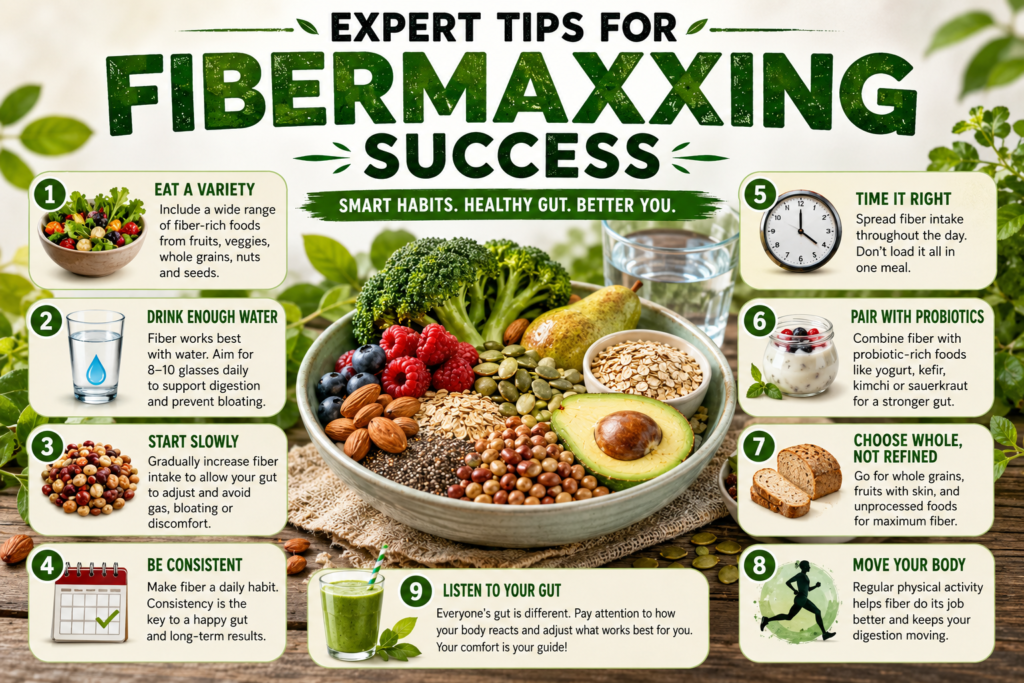
Critical: Don’t jump from 15g to 50g overnight. This causes bloating, gas, and discomfort. Gradual increases (5-10g per week) allow your microbiome to adapt.
Week 2: Add one extra serving of vegetables
Week 3: Add beans or lentils to one meal
Week 4: Introduce whole grain products or additional fruits - Step 3: Diversify Your Fiber Sources (Weeks 5-8)
Include all four fiber types: - Soluble: Oats, apples, beans
- Insoluble: Broccoli, brown rice, whole wheat
- Prebiotic: Garlic, onions, chicory
- Resistant starch: Sweet potatoes, unripe bananas
- Step 4: Establish Your Optimal Level (Weeks 9+)
Most people thrive at 40-60g daily. Pay attention to energy, digestion, and how you feel. This becomes your fibermaxxxing baseline. - Step 5: Monitor and Adjust
Track: - Daily fiber intake
- Energy levels
- Digestive comfort
- Mood and sleep quality
- Weight and body composition
Adjust based on results and feedback from your body.
More from us
6. BEST FOODS FOR FIBERMAXXING
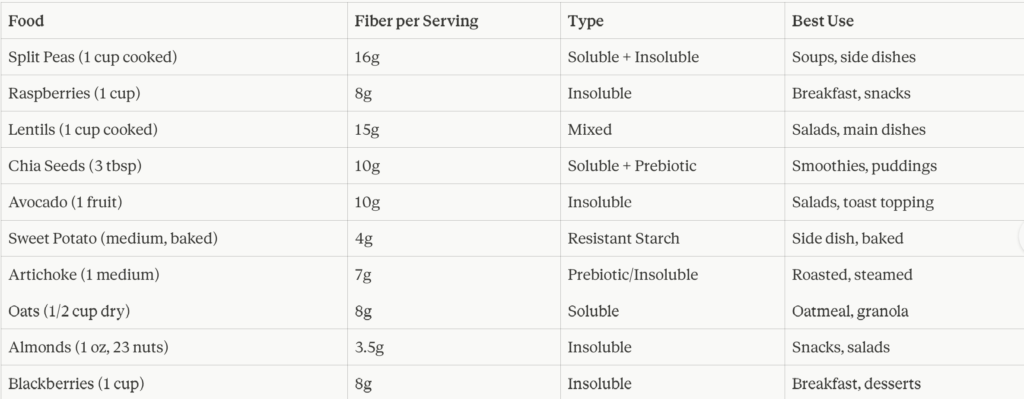
High-Fiber Meal Examples for Fibermaxxing
Breakfast (12g fiber):
- Oatmeal (8g) with berries (4g) and chia seeds (3g)
Lunch (18g fiber):
- Lentil soup (15g) with whole grain bread (3g)
Dinner (20g fiber):
- Grilled chicken, roasted broccoli (3g), sweet potato (4g), side salad with avocado (4g)
Snacks (6-8g fiber):
- Apple with almond butter, or pear with almonds
Daily Total: ~56g fiber
7. COMMON MISTAKES PEOPLE MAKE WITH FIBERMAXXING
Mistake #1: Increasing Too Quickly
The Problem: Jumping from 15g to 50g overnight causes severe bloating, gas, and discomfort.
The Fix: Increase by 5-10g weekly. Patience pays off.
Mistake #2: Neglecting Hydration
Fiber without adequate water causes constipation, not relief. Drink 80-100 oz daily when fibermaxxing.
Mistake #3: Relying Solely on Supplements
Fiber supplements (psyllium husk, inulin powder) are useful, but whole foods provide additional micronutrients, polyphenols, and varied bacterial food sources.
The Fix: Make 80% of fiber come from whole foods; supplements fill the remaining 20%.
Mistake #4: Ignoring Individual Tolerance
Some people’s guts respond differently. High FODMAP foods (onions, garlic, wheat) can trigger symptoms in sensitive individuals despite being high-fiber.
The Fix: Track individual responses and adjust accordingly.
Mistake #5: Assuming All Fiber Is Equal
Fiber quality matters. Whole grain fiber ≠ fiber-fortified processed snacks.
The Fix: Prioritize whole, unprocessed sources.
8 EXPERT TIPS FOR FIBERMAXXING SUCCESS
Tip #1: Build a Fiber-Rich Pantry
Stock these staples:
- Dried beans and lentils
- Whole grains (oats, brown rice, quinoa)
- Nuts and seeds (almonds, chia, flax)
- Frozen vegetables (convenience + no waste)
- Canned beans (no-prep option)
Tip #2: Use the “Fiber Stacking” Strategy
Combine fiber sources across meals rather than concentrating it. This distributes the bacterial fermentation process, reducing bloating.
Tip #3: Time Fiber Intake Around Exercise
Eat fiber-rich meals 2-3 hours before workouts. Digestion and energy are optimal with proper timing.
Tip #4: Experiment With Fiber Timing
Some people thrive with high-fiber breakfasts; others prefer spreading it throughout the day. Track what energizes you most.
Tip #5: Consider Prebiotic Specificity
Garlic, onions, and chicory root specifically feed Akkermansia muciniphila and Faecalibacterium prausnitzii—two of the most beneficial bacterial strains. Include them several times weekly.
9. FIBERMAXXING FOR DIFFERENT LIFESTYLES
For Athletes and Fitness Enthusiasts
Focus on resistant starch post-workout (cooled potatoes, plantain flour) to replenish glycogen and enhance butyrate production. This supports recovery and performance.
Target intake: 60-80g daily
For Busy Professionals
Prepped overnight oats, canned beans, frozen vegetables, and dried fruit enable fibermaxxing without extensive cooking.
Quick wins:
- Instant oatmeal packets (upgrade to steel-cut oats)
- Canned lentil soup
- Frozen broccoli and sweet potato
Target intake: 40-50g daily
For Weight Loss Goals
Fiber increases satiety, reduces calorie absorption, and stabilizes blood sugar. Combine fibermaxxing with adequate protein for optimal results.
Best fiber sources: Vegetables, legumes, whole grains (in controlled portions)
Target intake: 50-60g daily
For Digestive Sensitivity
Start conservatively (25-30g), increase slowly, and focus on soluble fiber initially. Add insoluble fiber gradually.
Gentle sources: Oats, cooked vegetables, bananas, beans (soft-cooked)
Target intake: 30-40g daily, increased over months
10. FAQ ABOUT FIBERMAXXING
Q1: How much fiber should I aim for when fibermaxxing?
A: Most fibermaxxing practitioners aim for 40-60 grams daily, depending on body weight, activity level, and individual tolerance. Start at 25-30g and increase gradually over 4-8 weeks. The optimal amount varies per person—track how you feel and adjust accordingly.
Q2: Can fibermaxxing cause weight loss?
A: Yes. Fiber promotes satiety, reducing overall calorie intake. Studies show consistent fibermaxxing correlates with 5-10% body weight loss over 6-12 months when combined with balanced nutrition and exercise. However, fibermaxxing’s primary benefit is health optimization, not rapid weight loss.
Q3: Is fibermaxxing safe for people with IBS or inflammatory bowel conditions?
A: Fibermaxxing requires careful implementation for IBS or IBD. Start with soluble fiber and low-FODMAP sources. Increase very gradually (2-3g weekly) and monitor responses. Consult a gastroenterologist or registered dietitian before aggressive fibermaxxing if you have these conditions.
Q4: Can I fibermax using supplements instead of whole foods?
A: Supplements are helpful but shouldn’t replace whole foods. Whole foods provide fiber, micronutrients, polyphenols, and diverse bacterial substrates that supplements can’t replicate. Aim for 80% from whole foods, 20% from supplements. Pure fibermaxxing emphasizes food-first approaches.
Q5: How long before I notice benefits from fibermaxxing?
A: Digestive regularity typically improves within 2-3 weeks. Energy levels often increase within 4-6 weeks. Significant mood, metabolic, and immune benefits usually emerge after 8-12 weeks of consistent fibermaxxing. Results vary individually.
Q6: Does fibermaxxing interact with medications?
A: Fiber can reduce medication absorption rates. If you take medications (especially diabetes, cholesterol, or thyroid medications), separate fiber intake by 2-3 hours from medication timing. Consult your healthcare provider before aggressive fibermaxxing if you’re on medications.
Q7: What’s the difference between fibermaxxing and other fiber-focused diets?
A: Fibermaxxing is data-driven optimization rather than a restrictive diet. It focuses on maximizing fiber intake through preferred whole foods, tracking results, and personalizing to individual responses. Other diet philosophies often impose restrictions; fibermaxxing is additive and individualized.
Q8: Can children and teenagers benefit from fibermaxxing?
A: Yes. Children benefit from increased fiber through whole foods. However, younger children (under 8) typically need less fiber (12-14g daily) than adults. Adjust fibermaxxing recommendations based on age and tolerance. Make it appealing: smoothie bowls, homemade granola, bean-based dips.
11. FINAL TAKEAWAYS
Key Takeaways From Fibermaxxing
1. Fibermaxxing is the intelligent evolution of fiber intake—intentional, data-driven optimization rather than hitting minimum requirements.
2. The 2026 gut health revolution centers on accessibility and scientific evidence. Fibermaxxing delivers both.
3. Your microbiome directly influences immunity, metabolism, mental health, and longevity. Fiber is the fuel your beneficial bacteria need to thrive.
4. Start gradually, diversify your fiber sources, and personalize to your body’s unique responses.
5. Consistent fibermaxxing produces measurable results: improved digestion, increased energy, better mood, and reduced disease risk.
Actionable Summary
- This Week:Tip #1: Build a Fiber-Rich Pantry
Stock these staples:
Dried beans and lentils
Whole grains (oats, brown rice, quinoa)
Nuts and seeds (almonds, chia, flax)
Frozen vegetables (convenience + no waste)
Canned beans (no-prep option)
Tip #2: Use the “Fiber Stacking” Strategy
Combine fiber sources across meals rather than concentrating it. This distributes the bacterial fermentation process, reducing bloating.
Tip #3: Time Fiber Intake Around Exercise
Eat fiber-rich meals 2-3 hours before workouts. Digestion and energy are optimal with proper timing.
Tip #4: Experiment With Fiber Timing
Some people thrive with high-fiber breakfasts; others prefer spreading it throughout the day. Track what energizes you most.
Tip #5: Consider Prebiotic Specificity
Garlic, onions, and chicory root specifically feed Akkermansia muciniphila and Faecalibacterium prausnitzii—two of the most beneficial bacterial strains. Include them several times weekly.
9. FIBERMAXXING FOR DIFFERENT LIFESTYLES
For Athletes and Fitness Enthusiasts
Focus on resistant starch post-workout (cooled potatoes, plantain flour) to replenish glycogen and enhance butyrate production. This supports recovery and performance.
Target intake: 60-80g daily
For Busy Professionals
Prepped overnight oats, canned beans, frozen vegetables, and dried fruit enable fibermaxxing without extensive cooking.
Quick wins:
Instant oatmeal packets (upgrade to steel-cut oats)
Canned lentil soup
Frozen broccoli and sweet potato
Target intake: 40-50g daily
For Weight Loss Goals
Fiber increases satiety, reduces calorie absorption, and stabilizes blood sugar. Combine fibermaxxing with adequate protein for optimal results.
Best fiber sources: Vegetables, legumes, whole grains (in controlled portions)
Target intake: 50-60g daily
For Digestive Sensitivity
Start conservatively (25-30g), increase slowly, and focus on soluble fiber initially. Add insoluble fiber gradually.
Gentle sources: Oats, cooked vegetables, bananas, beans (soft-cooked)
Target intake: 30-40g daily, increased over months
10. FAQ ABOUT FIBERMAXXING
Q1: How much fiber should I aim for when fibermaxxing?
A: Most fibermaxxing practitioners aim for 40-60 grams daily, depending on body weight, activity level, and individual tolerance. Start at 25-30g and increase gradually over 4-8 weeks. The optimal amount varies per person—track how you feel and adjust accordingly.
Q2: Can fibermaxxing cause weight loss?
A: Yes. Fiber promotes satiety, reducing overall calorie intake. Studies show consistent fibermaxxing correlates with 5-10% body weight loss over 6-12 months when combined with balanced nutrition and exercise. However, fibermaxxing’s primary benefit is health optimization, not rapid weight loss.
Q3: Is fibermaxxing safe for people with IBS or inflammatory bowel conditions?
A: Fibermaxxing requires careful implementation for IBS or IBD. Start with soluble fiber and low-FODMAP sources. Increase very gradually (2-3g weekly) and monitor responses. Consult a gastroenterologist or registered dietitian before aggressive fibermaxxing if you have these conditions.
Q4: Can I fibermax using supplements instead of whole foods?
A: Supplements are helpful but shouldn’t replace whole foods. Whole foods provide fiber, micronutrients, polyphenols, and diverse bacterial substrates that supplements can’t replicate. Aim for 80% from whole foods, 20% from supplements. Pure fibermaxxing emphasizes food-first approaches.
Q5: How long before I notice benefits from fibermaxxing?
A: Digestive regularity typically improves within 2-3 weeks. Energy levels often increase within 4-6 weeks. Significant mood, metabolic, and immune benefits usually emerge after 8-12 weeks of consistent fibermaxing. Results vary individually.
Q6: Does fibermaxing interact with medications?
A: Fiber can reduce medication absorption rates. If you take medications (especially diabetes, cholesterol, or thyroid medications), separate fiber intake by 2-3 hours from medication timing. Consult your healthcare provider before aggressive fibermaxing if you’re on medications.
Q7: What’s the difference between fibermaxing and other fiber-focused diets?
A: Fibermaxing is data-driven optimization rather than a restrictive diet. It focuses on maximizing fiber intake through preferred whole foods, tracking results, and personalizing to individual responses. Other diet philosophies often impose restrictions; fibermaxing is additive and individualized.
Q8: Can children and teenagers benefit from fibermaxing?
A: Yes. Children benefit from increased fiber through whole foods. However, younger children (under 8) typically need less fiber (12-14g daily) than adults. Adjust fibermaxing recommendations based on age and tolerance. Make it appealing: smoothie bowls, homemade granola, bean-based dips.
11. FINAL TAKEAWAYS
Key Takeaways From Fibermaxxing
1. Fibermaxing is the intelligent evolution of fiber intake—intentional, data-driven optimization rather than hitting minimum requirements.
2. The 2026 gut health revolution centers on accessibility and scientific evidence. Fibermaxing delivers both.
3. Your microbiome directly influences immunity, metabolism, mental health, and longevity. Fiber is the fuel your beneficial bacteria need to thrive.
4. Start gradually, diversify your fiber sources, and personalize to your body’s unique responses.
5. Consistent fibermaxing produces measurable results: improved digestion, increased energy, better mood, and reduced disease risk.
Actionable Summary
This Week: - Track your current fiber intake
- Identify gaps in your diet
- Purchase 2-3 high-fiber foods you enjoy
Next 4 Weeks: - Increase daily fiber by 5-10g weekly
- Aim for 30-35g daily by week 4
- Monitor digestion and energy levels
Month 2: - Continue gradual increases toward 40-50g daily
- Diversify fiber sources across meals
- Note improvements in energy, digestion, mood
Ongoing: - Maintain 40-60g daily fibermaxing
- Adjust based on individual response
- Track long-term health metrics
Your Call to Action
The 2026 gut health revolution isn’t waiting. It’s happening now. Fibermaxing is your accessible, science-backed pathway to transformative health.
Don’t wait for perfect conditions. Start today. Add one high-fiber food to tomorrow’s meals. Track how you feel. Build from there.
Your microbiome has over 100 trillion bacteria waiting to be nourished. Give them what they need: fibermaxing strategy, whole foods, consistency, and personalization.
Your gut—and your overall health—will thank you.