
Table of Contents
ToggleMenopause & Women's Health: Complete Guide to Managing Symptoms in 2026
Introduction
Menopause isn’t a disease. It’s a life stage—one that 2 million American women enter every year.
Yet for many, it feels like a crisis. Hot flashes wake you at 3 AM. Brain fog makes you forget words mid-sentence. Weight creeps up despite eating the same way you always have. Night sweats soak your sheets. Anxiety spikes without warning.
Here’s what you need to know: These symptoms are real, they’re temporary, and they’re manageable.
Menopause & women’s health is a topic that deserves honest conversation. Not the whispered “it’s just part of getting older” dismissal. And not the fear-mongering “your life as you know it is over” narrative either.
The truth is somewhere in between: Menopause represents significant biological changes, but with the right knowledge and strategies, you can move through it—and come out on the other side—feeling better than ever.
This guide covers everything you need to know about menopause and women’s health, from what’s happening in your body to practical strategies that actually work.

What is Menopause? Understanding the Biology
- Menopause marks the end of your reproductive years. Technically, you’ve reached menopause when you haven’t had a period for 12 consecutive months.
But menopause & women’s health isn’t just about the absence of periods. It’s about what’s happening at the hormonal level.
The Hormonal Shift
Your ovaries produce two key hormones:
Estrogen – Regulates: - Menstrual cycle
- Bone density
- Heart health
- Brain function
- Mood regulation
- Vaginal health
Progesterone – Manages:
- Sleep quality
- Anxiety levels
- Bone strength
- Mood stability
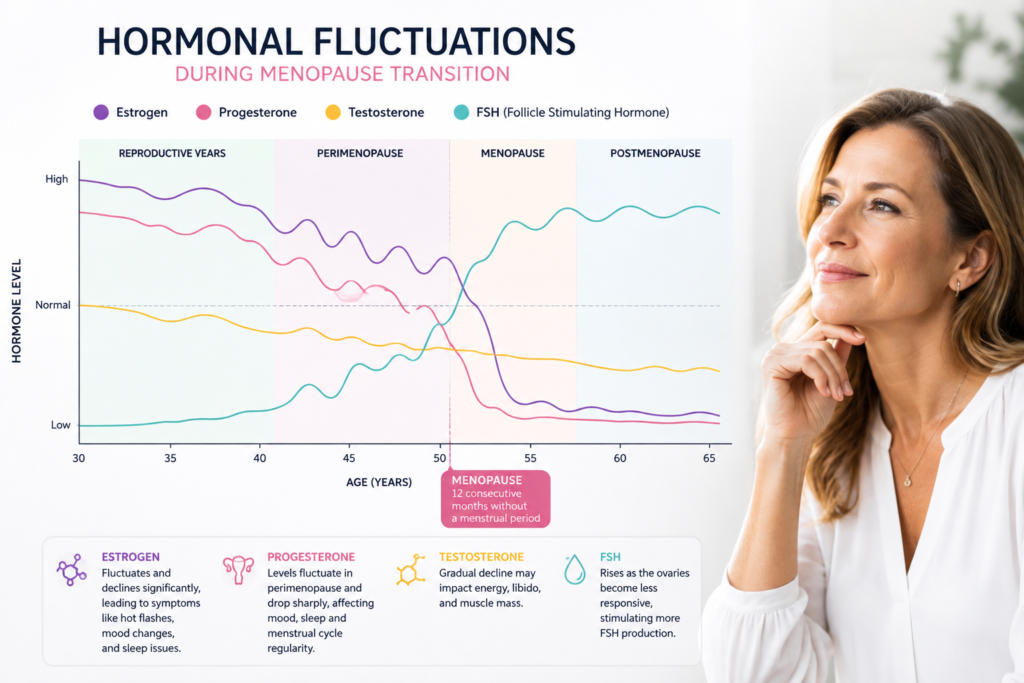
As you approach menopause, your ovaries gradually produce less estrogen and progesterone. This isn’t sudden—it’s a process that unfolds over years.
This hormonal decline triggers the symptoms most women experience.Why Menopause Matters Now
The average age of menopause in America is 51. That means most women spend 30+ years in postmenopause—potentially one-third of your entire life.
How you navigate menopause & women’s health directly impacts:
- Bone density (osteoporosis risk)
- Heart disease risk
- Metabolic health
- Quality of life
- Mental wellbeing
This isn’t a phase to white-knuckle through. It’s a health transition worth understanding.
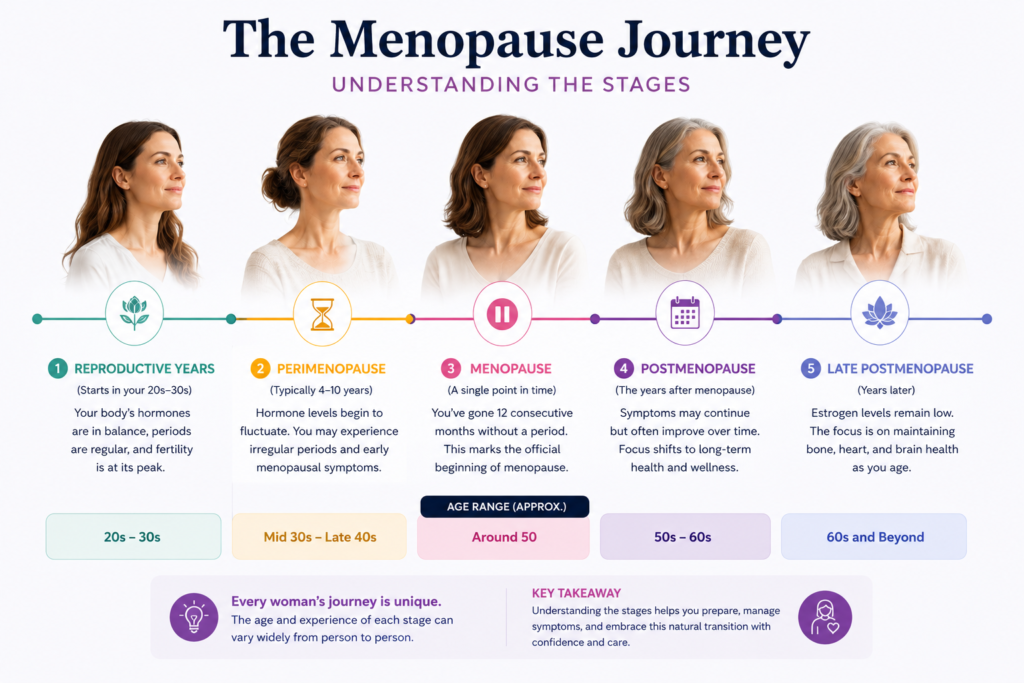
Stages of Menopause: Perimenopause to Postmenopause
Menopause isn’t a single moment—it’s a journey with distinct phases.
Stage 1: Perimenopause (4-10 years)
What’s happening: Hormone levels begin fluctuating. You still have periods, but they become irregular.
What you feel:- Irregular periods (sometimes heavy, sometimes light)
- Mood swings
Sleep disruption - Hot flashes begin
- Brain fog
Timeline: Typically begins in mid-40s
Important: Many women don’t realize they’re in perimenopause. They think something’s wrong. Nothing is—this is normal.
Stage 2: Menopause (The Transition Year)
What’s happening: Your last menstrual period occurs. You won’t know it’s your last until 12 months have passed.
What you feel: - Symptoms often peak during this year
- Hormonal chaos reaches maximum
- Most challenging period for many women
Timeline: One year at some point during your 50s
Stage 3: Postmenopause (Decades Ahead)
What’s happening: Hormone levels stabilize at their new, lower baseline.
What you feel: - Symptoms gradually resolve (usually within 5-8 years)
- Renewed energy and clarity
- No more periods
- New normal establishes
Timeline: The rest of your life (ideally 30+ years)
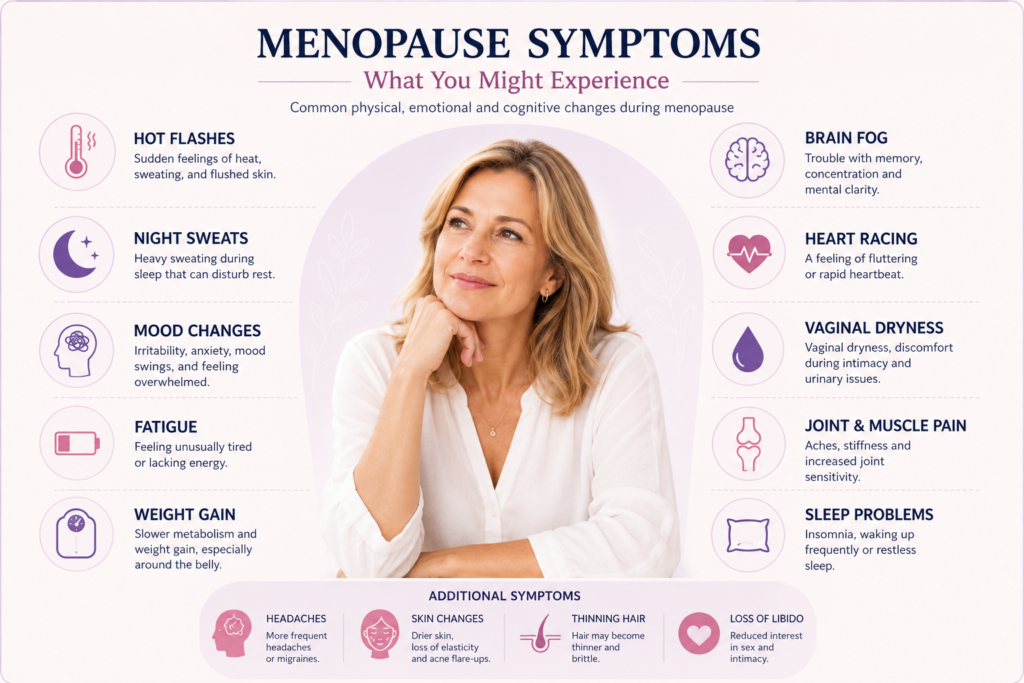
Common Menopause Symptoms Explained
Hot Flashes and Night Sweats
What’s happening: Sudden surge of heat, flushing, heavy sweating.
Why it happens: Fluctuating estrogen confuses your brain’s temperature regulation center.
How often: Can happen dozens of times per day or night.
Duration: Average 7-10 years (some women experience them for decades).
Management:- Dress in layers
- Keep room cool
- Avoid triggers (spicy food, hot drinks, alcohol)
- Regular exercise
- Deep breathing techniques
Brain Fog and Memory Issues
What’s happening: Difficulty concentrating, forgetfulness, feeling “fuzzy.”
Why it happens: Estrogen supports cognitive function. Lower levels = reduced mental clarity.
Duration: Usually improves significantly after menopause.
Management: - Consistent sleep (non-negotiable)
- Regular exercise (especially aerobic)
- Cognitive exercises (puzzles, learning)
- Adequate hydration
- Consider consulting a doctor if severe
Sleep Disruption
What’s happening: Difficulty falling or staying asleep, often from night sweats.
Why it happens: Progesterone helps regulate sleep. Lower levels = insomnia.
Impact: Poor sleep worsens every other symptom.
Management: - Cool, dark bedroom
- Consistent sleep schedule
- Avoid screens 1 hour before bed
- Magnesium supplementation
- Consider melatonin
- HRT often solves this quickly
Mood Changes and Anxiety
What’s happening: Irritability, anxiety, depression, emotional vulnerability.
Why it happens: Estrogen and progesterone affect neurotransmitters (serotonin, dopamine).
Duration: Usually improves as hormones stabilize.
Management: - Regular exercise (proven as effective as antidepressants)
- Therapy/counseling
- Stress management
- HRT if appropriate
- Medication if needed
Weight Gain and Metabolism Changes
What’s happening: Weight creeps up, especially around the midsection. You can’t lose weight the old way.
Why it happens: Lower estrogen increases fat storage. Metabolism slows 5-8% during menopause.
Duration: Permanent—this is your new metabolic reality.
Management: - Strength training (builds metabolism-boosting muscle)
- Adequate protein intake
- Reduced calorie intake (you burn fewer calories now)
- Regular cardio
- Realistic expectations about weight loss pace
Vaginal Dryness and Sexual Changes
What’s happening: Vaginal tissue becomes thinner, drier, less elastic. Sex can become uncomfortable.
Why it happens: Estrogen maintains vaginal health. Lower levels = atrophy.
Duration: Doesn’t typically improve without treatment.
Management: - Regular vaginal moisturizers
- Lubricants during intercourse
- Regular sexual activity (improves blood flow)
- Vaginal estrogen (creams, tablets, or rings)
- HRT
The Impact on Menopause & Women’s Health
Bone Health
Menopause accelerates bone loss. Women lose 3-5% of bone mass annually during early menopause.
Result: Osteoporosis risk increases dramatically.
Solution:- Strength training with weights
- Adequate calcium (1200 mg daily)
- Vitamin D (2000-4000 IU daily)
- Consider bone density screening (DEXA scan)
- HRT if appropriate
Heart Health
Estrogen protects your heart. Lower estrogen = higher heart disease risk.
After menopause, women’s heart disease risk approaches men’s.
Protection strategies: - Regular aerobic exercise
- Mediterranean diet
- Stress management
- Blood pressure monitoring
- Regular check-ups
Metabolic Changes
Your body literally burns calories differently now.
The reality: - Resting metabolic rate decreases 5-8%
- Insulin sensitivity decreases
- Blood sugar regulation changes
Adaptation: - Strength training is essential
- Protein intake becomes more important
- You may need to eat less to maintain weight
Hormone Replacement Therapy (HRT): What the Science Says
HRT remains controversial. Let’s get clear on the facts.
What HRT Does
Replaces estrogen and/or progesterone to relieve symptoms.
Benefits- Eliminates hot flashes (90%+ effective)
- Improves sleep dramatically
- Reduces mood symptoms
- Restores vaginal health
- Helps brain fog
- Improves bone density
- Reduces heart disease risk (if started early)
Risks - Slightly increased breast cancer risk (depends on type, duration, dosage)
- Increased blood clot risk (especially pills)
- Increased gallbladder issues
- Increased stroke risk (rare)
The Current Medical Consensus (2025)
The American College of Obstetricians and Gynecologists states:
“HRT can be appropriate for symptom management in women experiencing significant menopausal symptoms.”
Key point: For most women, the benefits of short-term HRT for symptom management outweigh the risks.
The Decision to Use HRT
This is personal. Consider:
- Severity of symptoms
- Your health history
- Family history of cancer/heart disease
- Your comfort level with hormones
- Available alternatives
Important: Work with a knowledgeable doctor. Not all doctors stay current on menopause science.
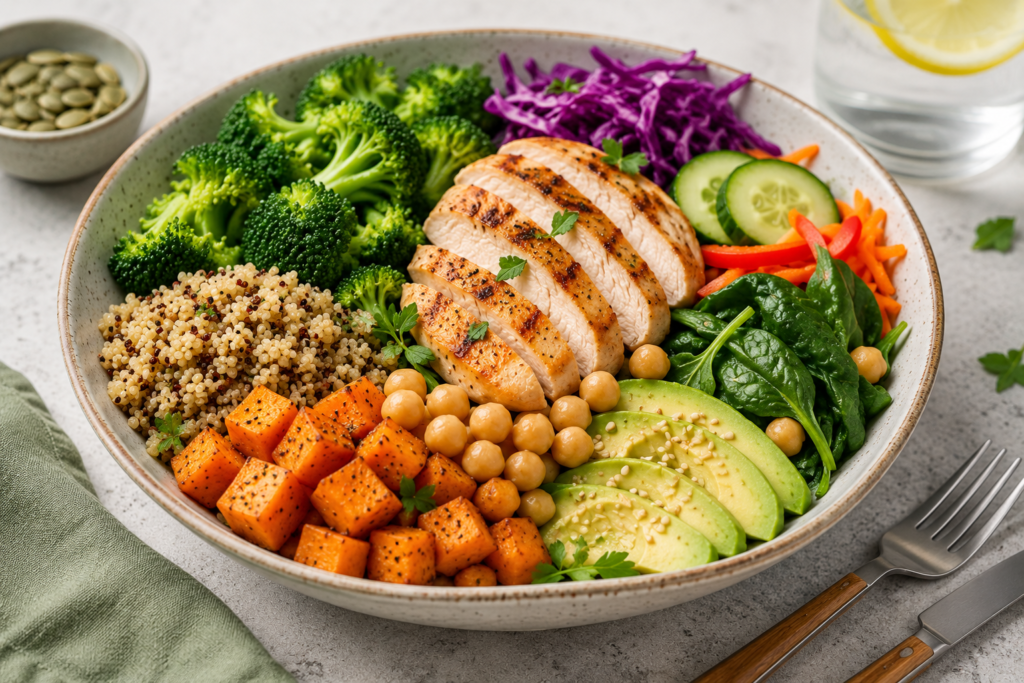
Nutrition for Menopause & Women’s Health
- Your nutritional needs shift during menopause & women’s health transition.
Calcium and Vitamin D
Calcium: 1200 mg daily (dairy, leafy greens, fortified foods)
Vitamin D: 2000-4000 IU daily (sun, salmon, supplements)
These become non-negotiable for bone health
Protein - Increase to 0.8-1 gram per pound of body weight
- Supports muscle maintenance during metabolic slowdown
- Helps with satiety (eat less, feel fuller)
Omega-3 Fatty Acids - Anti-inflammatory benefits
- Support heart and brain health
- Sources: Salmon, sardines, walnuts, flaxseeds
Whole Foods, Minimize Processed - Processed foods trigger inflammation
- Whole foods provide sustained energy
- Blood sugar stability = fewer mood swings and hot flashes
Exercise During Menopause
- Exercise becomes more important during menopause, not less.
Strength Training (Essential) - Builds muscle (counteracts metabolic slowdown)
- Strengthens bones
- Improves mood and sleep
- Boosts metabolism
Recommendation: 2-3 sessions weekly, all major muscle groups
Aerobic Exercise (Important) - Improves cardiovascular health
- Helps hot flash management
- Boosts mood
- Aids sleep
Recommendation: 150 minutes moderate cardio weekly
Flexibility and Balance - Prevents injury and falls
- Maintains mobility
- Helps sleep quality
Recommendation: Yoga or stretching 2-3 times weekly
Consistency Over Intensity
Exercise must feel sustainable. Too intense? You’ll quit.
The best exercise program is the one you’ll actually do.
Mental Health During Menopause
- The mood changes during menopause & women’s health aren’t “all in your head.”
They’re biological. Real. Valid.
Managing Anxiety - Regular exercise (most effective)
- Meditation/mindfulness
- Therapy
- Medication if needed
- HRT if appropriate
Managing Depression - Exercise (proven as effective as antidepressants)
- Therapy
- Medication
- HRT
- Vitamin D (especially if deficient)
Supporting Yourself - Acknowledge what you’re experiencing is real
- Don’t minimize your symptoms
- Seek professional help if needed
- Connect with other women going through menopause
- Practice self-compassion


When to See a Doctor
See a healthcare provider if:
✓ Symptoms severely impact quality of life
✓ Sleep is significantly disrupted
✓ Mood changes are severe or persistent
✓ You want to discuss HRT
✓ Vaginal symptoms affect sexual function
✓ You have concerns about bone health
✓ You want baseline health screening
Important: Find a doctor who takes menopause seriously—one who stays current on research and offers multiple treatment options.
Frequently Asked Questions About Menopause & Women’s Health
Q1: How long will menopause & women’s health symptoms last?
A: On average, 5-8 years from perimenopause through postmenopause. Some women experience symptoms for 10+ years; others for just 2-3 years. Severity varies dramatically between individuals. The good news: symptoms almost always improve over time.
Q2: Will I lose my sex drive permanently?
A: Not necessarily. Yes, menopause changes your sexual function temporarily. Vaginal dryness, decreased arousal, and difficulty with orgasm are common. But these are treatable (lubricants, HRT, therapy). Many women report improved sex after menopause—no more birth control concerns, no more periods, more life experience. Sexual satisfaction is highly individual.
Q3: Can I prevent menopause symptoms?
A: Not entirely, but you can minimize them. Healthy lifestyle choices (exercise, nutrition, sleep, stress management) reduce symptom severity. Some women naturally have fewer symptoms regardless of lifestyle—this is partly genetic. You can’t prevent menopause, but you can prepare for it.
Q4: Is HRT safe? Should I take it?
A: HRT is safe for most women when used appropriately. It carries some risks (slightly increased breast cancer risk, blood clots, stroke). For most women, short-term use to manage significant symptoms provides benefits that outweigh risks. This is a personal decision made with your doctor. Consider your health history, symptom severity, and comfort level.
Q5: Can I still lose weight during menopause & women’s health transition?
A: Yes, but differently. You’ll burn 5-8% fewer calories now, so you need to eat less or exercise more. Strength training becomes essential (builds metabolism-boosting muscle). Weight loss will be slower. Many women find accepting a slightly higher weight while improving health markers (blood pressure, cholesterol, fitness) is more realistic than chasing pre-menopause weight.
Q6: What’s the difference between perimenopause and menopause?
A: Perimenopause is the years leading up to menopause when hormones fluctuate and periods become irregular. Menopause is the point when you’ve gone 12 months without a period. Postmenopause is everything after. Most women experience perimenopause symptoms, not realize what’s happening, and think something’s wrong. Understanding this distinction helps.
Q7: Should I get hormone testing?
A: Probably not. Blood tests for estrogen/progesterone during perimenopause are unreliable (hormones fluctuate daily). Diagnosis is based on symptoms and menstrual history, not blood work. Once you’ve been period-free for 12 months, testing isn’t necessary. Discuss with your doctor if testing would ease your mind.
Q8: Can I use bioidentical hormones instead of standard HRT?
A: “Bioidentical” means chemically identical to hormones your body produces. Sounds better, but no scientific evidence shows bioidentical HRT is safer or more effective than standard HRT. Both carry similar risks and benefits. What matters is the dose, duration, and type (estrogen alone vs. with progesterone), not whether it’s bioidentical or synthetic.
Conclusion
Key Takeaways
Menopause & women’s health isn’t something to fear or suffer through silently.
It’s a significant life transition requiring:
✅ Understanding what’s happening in your body
✅ Lifestyle support (exercise, nutrition, sleep)
✅ Professional guidance from knowledgeable healthcare providers
✅ Personal choice about whether HRT is right for you
✅ Self-compassion through a challenging phase
✅ Recognition that postmenopause can be better than what came before
Moving Forward
Menopause isn’t the end of your life. It’s a transition within it.
Many women report that life after menopause feels easier—more freedom, more confidence, more clarity than they experienced in decades.
Your job is to navigate the transition thoughtfully:
Educate yourself about what’s happening
Take care of your body (movement, nutrition, sleep)
Seek professional help when needed
Connect with other women going through the same experience
Trust that this phase is temporary and manageable
Menopause & women’s health is a conversation we need to have openly, honestly, and without shame.
You’re not alone in what you’re experiencing. Millions of American women are navigating menopause right now—some struggling, some thriving, all of them finding their way through.
Your best days may still be ahead
https://trendstales.com/longevity-training-how-to-live-longer-stronger/